Storm Damage & Cost Guide
Storm & Hail Window Damage: What to Do First
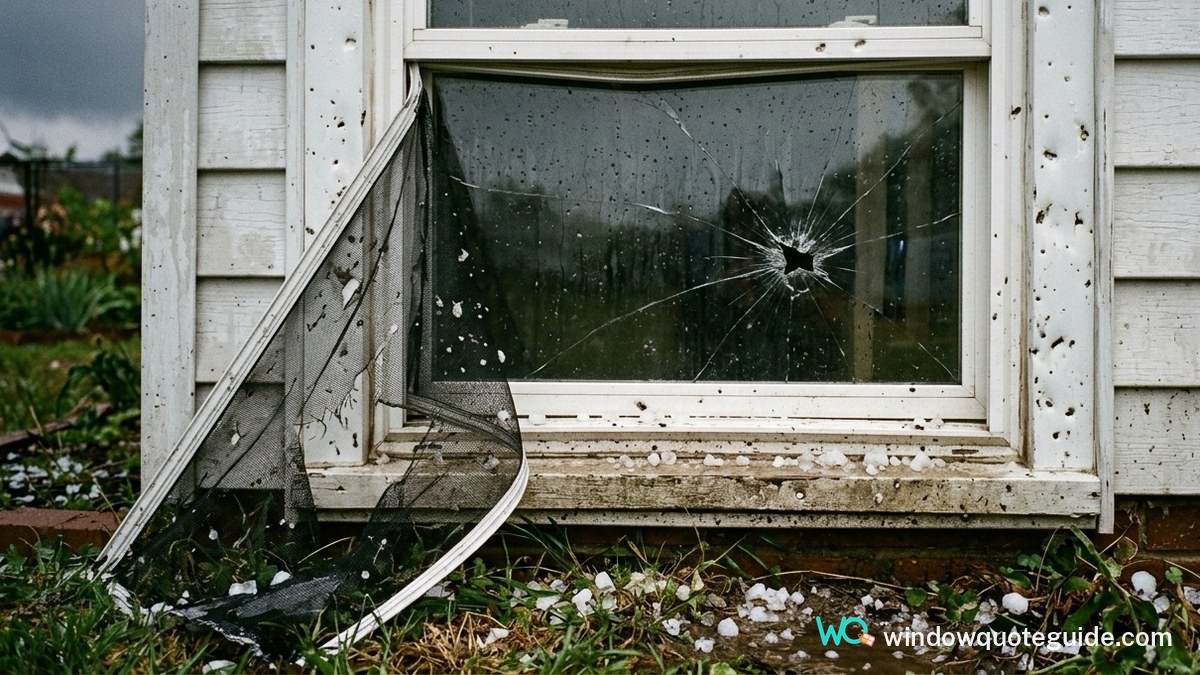
The storm passes. You walk the outside of the house with a coffee, looking for the obvious thing — the shattered pane, the branch through the glass.
Sometimes it's right there. But more often what you find is smaller and stranger: a dent in the vinyl frame. A screen with a hole in it. A pane that looks perfectly fine and then, three months later, goes cloudy from the inside.
The damage you can see isn't always the damage that matters.
The first hour
Order matters here. Step 2 protects your money; step 3 protects your house.
- Clear the area. Keep people and pets away from broken glass, especially barefoot kids. Don't pull large shards out of a frame by hand.
- Photograph before you touch anything. Wide shots showing the whole window and the house, then close-ups of the damage. Include whatever caused it — the branch, or the hail on the ground next to a coin for scale.
- Cover the opening. Plywood if you have it, heavy plastic sheeting and tape if you don't. The goal is stopping water and securing the house, not making it pretty.
- Keep every receipt. Tarps, plywood, tape, emergency board-up service. Most policies reimburse reasonable emergency measures, but only if you can show what you spent.
- Get a written estimate before you call your insurer. You need the repair number before you can judge whether a claim is worth filing at all.
How to tell what you're actually dealing with
Not all storm damage needs the same response. Walk each window and sort it into one of three buckets.
Between those two sits the expensive category, and it's the one people miss:
- Dents or cracks in a vinyl or aluminum frame, which can break the weather seal
- A window that suddenly sticks, won't lock, or won't close flush — the frame may have shifted
- New drafts or whistling that weren't there before the storm
- Condensation appearing between the panes in the weeks after
A hail dent in a frame doesn't look like $700 of damage. But if it compromised the seal, that window will fog within a year or two — and by then the storm is long past and the connection to a covered event is hard to prove. Our guide on why windows fog between the panes explains what's happening inside when that starts.
What storm-damaged window replacement costs
Three different repairs get called "fixing the window," and they cost very different amounts:
| What gets replaced | Typical installed cost | When it applies |
|---|---|---|
| Glass pane only | $150–$500 | Single-pane break, frame intact and square |
| Sash (the moving part) | $250–$700 | Broken insulated glass unit, frame still sound |
| Full window unit | $300–$1,200 | Frame damaged, unit out of square, or parts no longer made |
Large picture windows, wood frames, custom shapes and impact-rated glass sit above these ranges — a single big picture window can run well past $1,500 installed. Ranges compiled from published contractor and home-services cost data (Angi, HomeAdvisor, This Old House, 2025–2026).
Get your number before the adjuster gets theirs.
See replacement costs →The claim question
Storm and hail damage is one of the situations homeowners insurance is actually designed for — it's sudden and accidental, which is the category policies cover. That doesn't automatically mean you should file.
The deciding number is your deductible. If one window costs $600 to replace and your deductible is $1,000, a claim pays you nothing and still lands on your record. If hail took out six windows at $4,200 total, the math flips completely.
One trap worth knowing: many coastal and storm-exposed states use a separate hurricane or windstorm deductible calculated as a percentage of your home's insured value rather than a flat amount. That can be several thousand dollars before coverage begins, and it applies specifically to the storm damage you're trying to claim.
The full breakdown of what policies do and don't cover is in our guide on whether homeowners insurance covers window replacement.
Storm-chasing contractors
After a significant hail event, crews arrive in the neighborhood within days. Some are legitimate contractors following the work. Some are not.
The pattern to watch for is pressure combined with paperwork: a door knock, a free inspection that finds extensive damage, and a contract to sign today before the "storm pricing" expires. Offers to waive or absorb your deductible are a particular warning sign — in a number of states that practice is illegal, and accepting it can put you on the wrong side of a claim.
The protection is boring and effective: get two or three written estimates, prefer contractors with a local address and history, and don't sign anything the same day someone knocks. Our guide on getting quotes without the pressure covers how to run that conversation.
Sources & further reading
.GOVNOAA National Weather Service — Public storm event records.GOVFEMA / FloodSmart — Flood damage requires separate coverage.GOVENERGY STAR — Windows, Doors & SkylightsFrequently asked questions
Cost ranges are national estimates and will vary by region, window size, material and installation conditions. This guide is general information, not insurance or legal advice — your policy documents, your local building department and your state department of insurance are the authoritative sources for your situation.
← All guides