Insurance & Cost Guide
Does Homeowners Insurance Cover Window Replacement?
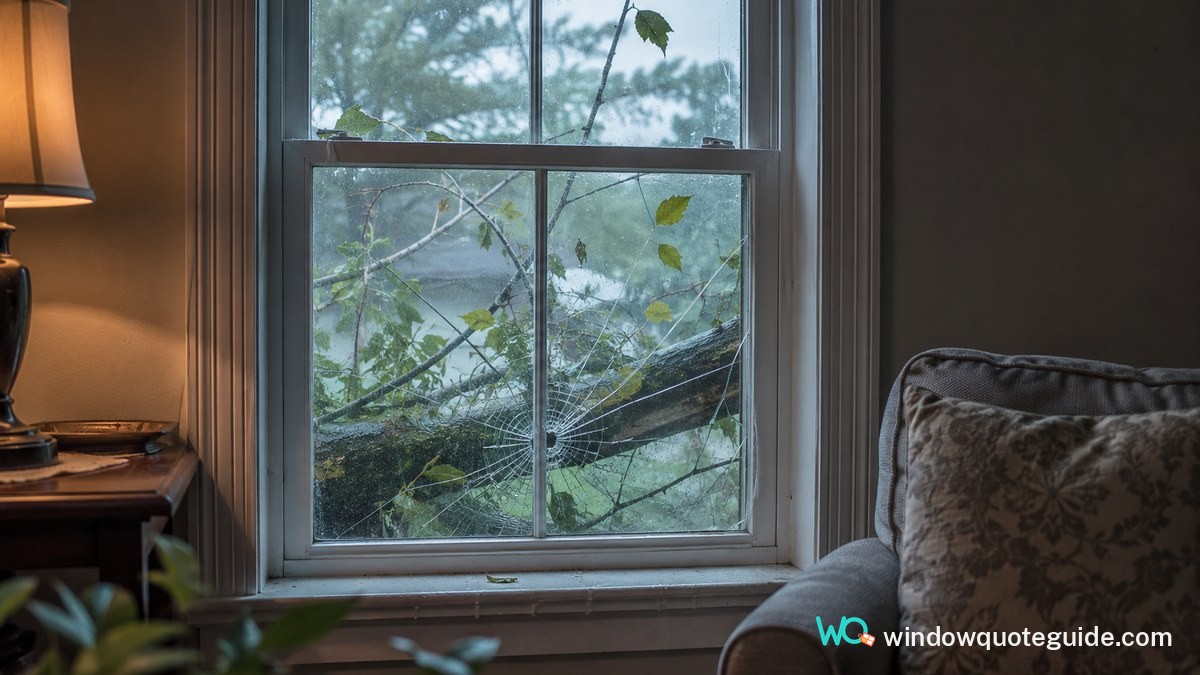
A branch came through the front window overnight. Or hail chewed up the south side of the house. Or you finally looked at the rotted frames you've been ignoring for six years and thought: maybe insurance covers this.
Here's the thing almost nobody tells you up front. The adjuster isn't going to look at how bad the damage is. They're going to look at how it happened.
Insurance doesn't ask how bad your window looks. It asks how it broke.
The one question that decides everything
Standard homeowners policies are built to cover sudden, accidental events. Something happened on a specific day that you didn't cause and couldn't reasonably prevent. That's the category insurance pays for.
What they're built to exclude is deterioration — anything that got worse slowly, over years, while you owned the house. Insurers call this maintenance, and their position is that maintenance is the homeowner's job, not the policy's.
So a hailstorm that cracks four panes on a Tuesday is a claim. Four windows that finally rotted through after twenty-five Michigan winters is a home improvement project. Same number of windows, same replacement cost, completely different answer.
The foggy-window one catches people constantly. A window that's clouded between the panes looks broken, and in a real sense it is — but it broke slowly, as the insulating seal gave out. Most policies call that deterioration. If that's your situation, our guide on why windows fog between the panes walks through what your actual options are.
Know the repair number before you call anyone.
See replacement costs →The deductible math nobody does first
Say your policy covers the damage. That still doesn't mean you'll see money.
Your deductible comes out first. If your deductible is $1,000 and a single window replacement runs $600, the claim pays you nothing — and you've now got a claim on your record anyway. Insurers look at claim history when they set renewal premiums, so a small claim can quietly cost more than it returns.
So the order of operations is: get a written repair estimate first, then compare it to your deductible, then decide whether to call your insurer. Not the other way around.
The matching problem
Here's a surprise that hits people after the check arrives. Insurance pays to fix what broke. It generally does not pay to replace undamaged windows just so the house matches again.
If three windows on the front of a 1998 house get destroyed and that exact style hasn't been made in fifteen years, you can end up with three new windows that don't quite match the other eleven. Some states have "matching" regulations requiring a reasonably uniform appearance after a covered loss, and some don't. Your state insurance department can tell you which camp you're in — a five-minute phone call that occasionally changes a claim by thousands of dollars.
Actual cash value vs. replacement cost
Two policies can both "cover" your windows and pay very different amounts.
Replacement cost value (RCV) pays what it costs to put in a comparable new window today. Actual cash value (ACV) subtracts depreciation first — so a twenty-year-old window is valued as a twenty-year-old window, not a new one. On an older house the gap between those two numbers can be substantial.
Find this in your policy before you need it. It's usually stated in the declarations page near the top, and it's the single line that predicts how satisfied you'll be with a payout.
When paying out of pocket is the smarter move
Filing isn't automatically the right call. Paying yourself often makes more sense when:
- The repair estimate is close to or below your deductible
- You've already filed a claim or two in the last few years
- The windows were on their way out anyway and you'd rather put the money toward a full upgrade
- You live in a coastal state with a percentage-based hurricane or windstorm deductible, which is often far higher than your standard one
That last point surprises people. In many hurricane-exposed states the wind deductible is calculated as a percentage of your home's insured value rather than a flat dollar figure — which can mean several thousand dollars before coverage starts.
If you're weighing repair against full replacement regardless of insurance, our guide on whether to repair or replace a window lays out where the line usually falls. And if a storm caused the damage, what to do first after storm and hail damage covers the steps that protect the claim.
Sources & further reading
.GOVFEMA / FloodSmart — Flood damage requires separate coverage.GOVFEMA — Disaster and insurance guidance for homeowners.GOVENERGY STAR — Windows, Doors & SkylightsFrequently asked questions
This guide explains how homeowners insurance policies generally treat window damage. It is general information, not insurance or legal advice, and it can't tell you what your specific policy covers. Coverage varies by insurer, policy form and state — check your policy documents or your state department of insurance.
← All guides