Cost guide
How Much Do Black Frame Windows Cost? (The Farmhouse Trend, Priced)
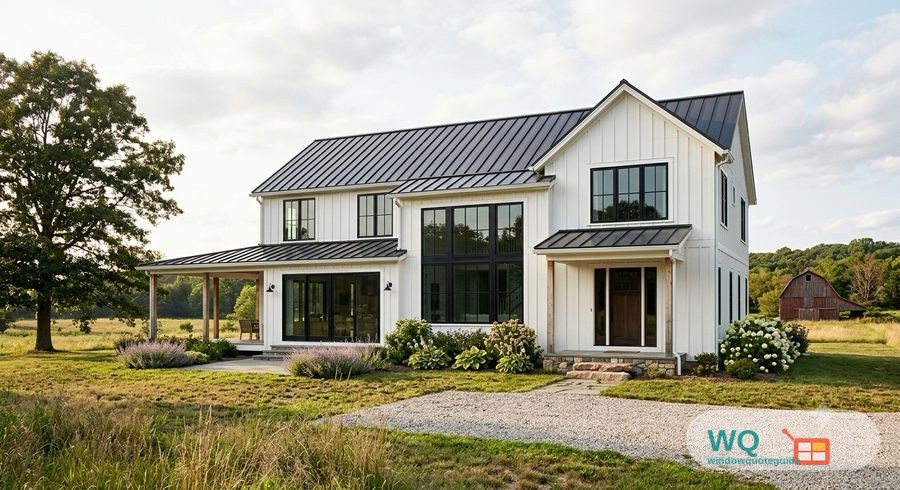
Black window frames are the defining look of the modern farmhouse era — white siding, black gables, black frames. What Pinterest doesn't mention: black is a paid upgrade, typically adding 10–25% per window.
The premium, in dollars
| Setup | White vinyl | Black exterior |
|---|---|---|
| Per window installed | $360 – $850 | $420 – $1,050 |
| 10-window project | $3,600 – $8,500 | $4,200 – $10,500 |
The upcharge varies by manufacturer and material. Some budget lines charge a flat $40–$80 per window for black; premium lines fold it into higher-tier products only.
Why black costs more
It's not paint snobbery — it's physics and factory logistics. Dark frames absorb far more heat, so manufacturers use heat-stabilized compounds and capstock layers on vinyl to prevent warping (a real failure mode on cheap dark vinyl in hot climates). Black also runs on separate production lines with lower volume than white, and lower volume means higher unit cost.
The three ways to get the look
- Black exterior / white interior (most popular). You get the curb appeal without committing your interior design to black. Usually the same upcharge as full black.
- Full black, inside and out. The bold version. Interior black shows dust less than you'd fear and reads "custom" — but you're committing for 20+ years on vinyl, since it can't be repainted.
- Fiberglass or aluminum-clad in black. Costs more upfront ($500–$1,300 installed) but handles heat better and can be repainted when the trend moves on. In hot-climate states, this is honestly the safer engineering choice for dark colors.
One warning for hot climates
If you're in Texas, Arizona, Florida, or similar sun, ask specifically whether the black vinyl line you're quoted is heat-reflective / warp-warrantied for dark colors. Some budget black vinyl is not, and warping voids more warranties than homeowners expect. A good installer will answer this without flinching; a bad one will change the subject.
Is the trend a resale risk?
Black frames have been mainstream since the late 2010s — long enough that they read as "current," not "fad," to most buyers. Real estate consensus: on the right house style (farmhouse, modern, transitional), they help. On a classic colonial, white still wins.
Frequently asked questions
Get your number, both ways
The black premium differs by region and product line, so price it properly: run your project through our free calculator for a baseline (60 seconds, no email), then ask installers to quote white and black side by side
Calculate my window replacement cost →WindowQuoteGuide is an independent cost-information resource. Estimates are based on published national and regional installation averages and are for general guidance only. If you request quotes through our site, we may receive compensation from partner networks — this never affects the price you pay.
← All guides